ndp wrote:
As I understand it, SafeSpeed advocates permitting drivers to drive at any speed provided it is safe.
However, as has been discussed elsewhere, there isn't really such a thing as "safe" or "dangerous", rather there are shades of risk. When we say "safe" we really mean "within an acceptable level of risk".
Ultimately, what the acceptable level is is a choice. There isn't a right or wrong answer - it is subjective.
So who should choose what the acceptable level of risk is?
As I understand Safespeed, from the pages I have read, and from taking part in forums over a long period - both here and on the now defunct CSCP site, Safespeed advocates choosing a speed that is safe, and that speed is not a definition of safe - many other influences come to bear.
As to who should determine an acceptable level of risk, then you should expand that a little.
If it is personal risk, then like mountain climbing, hang gliding, parachuting, etc. then the participant has to determine what level of risk he/she/them should accept. (You see, I just accepted a risk that "them" might or might not cause offence to gays, or PC activists!)
If the activity includes others, then everyone involved shoulders some of the risk, to varying degrees.
"Should I get in this car with a driver I think is careless?"
"Should I pass this horse and rider or wait until the road is wider"
and of course other road users sharing the same stretch of road should be making mutually beneficial decisions, based on training, experience, and rules. "Why SHOULD I drive on the right?".
When it comes to selecting an appropriate speed, there is only one rule - the posted limit - which should not be seen as a target we are told.
That is like saying you should not flinch if something appears to be flying at you from the film screen in the cinema - you cannot help others from reacting to their embedded perceptions.
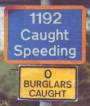
Similarly, despite what the SCP's tell us, drivers do watch the speedo and not the road, and others who are already below the limit, brake for the cameras.
Those who either dont care for the posted limit, or are driving without due care, and fail to keep to the limit, OR see the camera, continue to get caught.
Lots of them get away with speeding because they know where the camera is, and merely slow for 1 hundred yards or so.
If you are driving towards a chasm - you watch out for the chasm. If there were a minefield in front of it, you'd watcxh out for mines, until the chasm was right in front of you.
Cameras are like a minefield. Policemen are like sentrys guarding the chasm - they dont blow up under your feet, yet warn you when you approach the danger of the chasm.
Replace the cloak of invisibility, and a large proportion of drivers will simply look out for mines!

 Login
Login Register
 FAQ
FAQ Search
 Members




 age...

 . and he did not reverse into my car (had anticipated and kept me distance
  ) - but let's just say he will not forget our little "talk" in an 'urry


