Safe Speed Forums

The campaign for genuine road safety
It is currently Thu Jun 04, 2026 13:31

All times are UTC [ DST ]


Post new topic Reply to topic  [ 42 posts ]  Go to page Previous  1, 2, 3  Next
Author Message
PostPosted: Tue Aug 30, 2005 20:24 
Offline
Life Member
Life Member

Joined: Sat Mar 27, 2004 13:50
Posts: 2643
SafeSpeed wrote:
Yes yes yes, but ALSO imagine where the forces go if you put a torque shock into the wheels. Lower gear means more reaction effect from engine stiffness and rotating mass (crank /flywheel). And its converse - pop the throttle in first and 70% more torque is unleashed on the drivetrain. Even if you're trying to be gentle, any given throttle movement gives very much more torque in the transmission in 1st compared to 2nd.


But there are other important considerations, and a lot depends on the car as well.
In my car, I cannot do 20mph in 3rd - the engine literally stalls. In second it's doing 1800rpm and starts struggling a bit if I drop below 20mph. I certainly don't have enough oomph at 20mph in second for a quick getaway if I need to, so if I'm travelling for short distances on a good road surface at 20 or less, I'd rather use first gear - and the increased engine braking also helps if I have to stop in a hurry. If there are humps/potholes or if I have to travel more than a short distance then I stick to second gear.

It really says more about thedaftness of 20mph limits than anything else.

Cheers
Peter

_________________
Only when ideology, prejudice and dogma are set aside does the truth emerge - Kepler


Top
 Profile Send private message  
 
PostPosted: Tue Aug 30, 2005 21:08 
Offline
Gold Member
Gold Member

Joined: Sun Feb 06, 2005 19:14
Posts: 410
Capri2.8i wrote:
My dad swears by braking just before the bump, to shift the weight to the front springs and as they release it helps the suspension to rise with the hump. I've tried it myself, and it does feel smoother, but to get some benefit you have to have a resonable amount of speed to be able to break enough to make a diference. This often means having to speed up in between each hump, a tad annoying. But I'd say it does help.

This is exactly what I do - in a 30 limit with humps that my car can comfortably take at 15, say, I stay in 2nd gear, and accelerate to 30 between humps, then brake hard to compress the front suspension just before the hump, then lift off so the front of the car is rising as the front wheels hit the hump at 15mph. Gives the car much less of a jolt than trying to drive over at a steady 15mph.

The other thing you can do is swerve gently from side to side, to drive over them at an angle, thus reducing the steepness of the gradient change.

Regarding the original post, I see a lot of what I term "buffer zones" around here, where they reduce a speed limit below what you would otherwise set for a particular stretch of road. E.g. where we used to have 50 transitioning to 30, we now have half a mile of the 50 reduced to 40, presumably to try to make it more likely people will slow down for the 30 section. But it's silly, because where the 40 section starts, it's arguably the safest stretch of the road for a few hundred metres, so you go from a 50 limit to a safer stretch that is now a 40 limit. Indeed modern legislation in general seems obsessed with "buffer zones" by which I mean behaviour which is not harmful in itself is made illegal in an attempt to prevent harmful behaviour. As a simple example, carrying a knife is not harmful in itself, only using it to harm someone is, but the law makes it illegal to carry a knife, to create a "behavioural buffer zone".


Top
 Profile Send private message  
 
 Post subject:
PostPosted: Tue Aug 30, 2005 21:23 
Offline
Friend of Safe Speed

Joined: Sat Mar 06, 2004 12:01
Posts: 4815
Location: Essex
Quote:
The other thing you can do is swerve gently from side to side, to drive over them at an angle, thus reducing the steepness of the gradient change.


Oh yes - always. This has two benefits: 1, as you say, less steep angle and 2, wheels hit it one after another instead of both together, reducing the stresses on everything in suspension territory, including the occupants, by a factor of 4.


Top
 Profile Send private message  
 
 Post subject:
PostPosted: Wed Aug 31, 2005 00:36 
Offline
Member
Member

Joined: Wed Apr 27, 2005 01:42
Posts: 686
Yes, going over them at an angle definitely helps.

_________________
“For every complex problem, there is a solution that is simple, neat, and wrong.” - H. L. Mencken


Top
 Profile Send private message  
 
 Post subject:
PostPosted: Wed Aug 31, 2005 11:39 
Offline
User

Joined: Tue Mar 09, 2004 12:33
Posts: 770
Location: Earith, Cambs
Speed bumps are great for one thing - testing the efectiveness of spring rates v damping rates on rally cars. You have a pre-set constant physical test with no variables, unlike a gravel road where repeated runs at different times can suffer from differing conditions. True, they only allow testing and checking of changed settings in bump and rebound plus maximum deflection which you measure by placing a collar around the damper central strut and checking after each run, but it's a good place to start :lol:
In my road car the gear for the bumps is not an issue - it's an auto.


Top
 Profile Send private message  
 
PostPosted: Sat Sep 03, 2005 18:16 
Offline
Friend of Safe Speed
User avatar

Joined: Tue Mar 09, 2004 23:09
Posts: 6737
Location: Stockport, Cheshire
PeterE wrote:
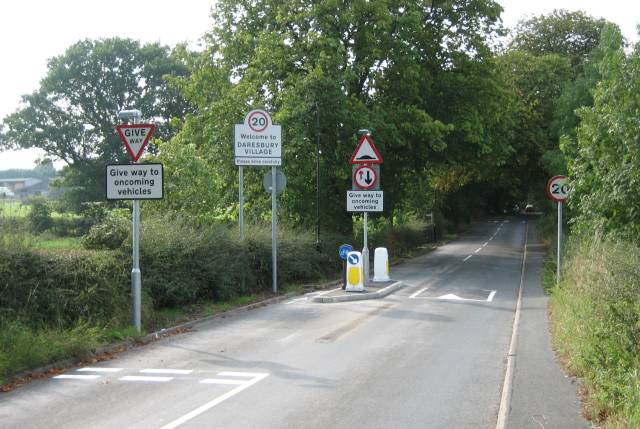
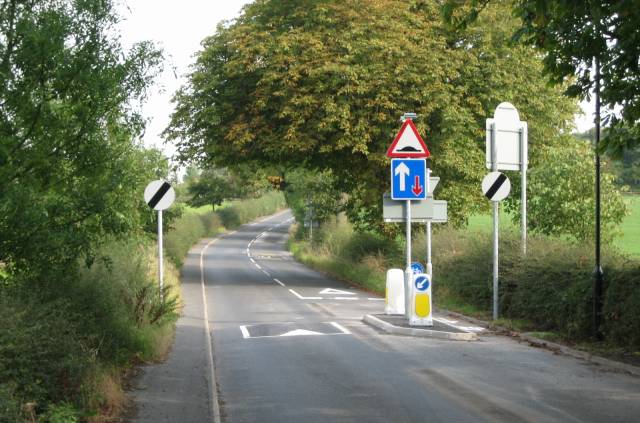
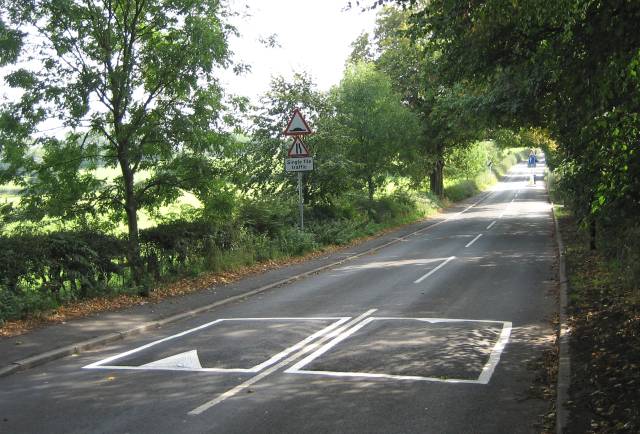
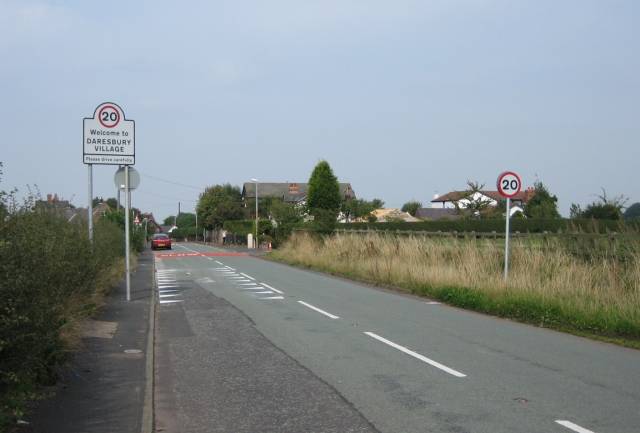
Recently, Halton UA in Cheshire have reduced the speed limit on the B5356 in the centre of the village of Daresbury (just off the A56 S of Warrington) from 30 to 20. They have also extended the 20 for about 200 yards into a former NSL (which is totally non built-up), complete with humps and chicane Image

I've taken some photos of this today:

This is the B5356 approaching the village from the east. The NSL used to end around where the parked cars can just be seen in the shade.

Image

This is the other side of the chicane. At least it's still NSL!

Image

This is looking back towards the chicane, showing a long length of rural 20 limit:

Image

And this is the 20 mph gateway at the southern end of the village. There is a school on the left just as you enter the built-up area, but even so this is utterly ridiculous:

Image

_________________
"Show me someone who says that they have never exceeded a speed limit, and I'll show you a liar, or a menace." (Austin Williams - Director, Transport Research Group)

Any views expressed in this post are personal opinions and may not represent the views of Safe Speed


Top
 Profile Send private message  
 
 Post subject:
PostPosted: Sat Sep 03, 2005 21:43 
Offline
Gold Member
Gold Member

Joined: Sun Feb 06, 2005 19:14
Posts: 410
Well, if you think that's bad, this one has probably been mentioned before, but the A308 has a 20mph section, and it's the primary route from the M25 to the large town of Kingston upon Thames. It's extremely hard to see the justification for it, I honestly can't see the difference between the stretch and countless 30mph limits around the country, indeed it strikes me as safer than a lot of 30mph limits.

In the first of your pictures, I can see on the left a wooden sign - do pedestrians cross the road at this point?


Top
 Profile Send private message  
 
 Post subject:
PostPosted: Sun Sep 04, 2005 01:35 
Offline
Gold Member
Gold Member

Joined: Mon Mar 15, 2004 15:43
Posts: 2416
stevei wrote:
Well, if you think that's bad, this one has probably been mentioned before, but the A308 has a 20mph section, and it's the primary route from the M25 to the large town of Kingston upon Thames.

That stupid little section at Hampton Wick you mean? Yep, it's a stupid, stupid place to have it. Not only is it pointless (the nature of the road is such that the only drivers who'd go steaming through there are the type who wouldn't give a damn about the :20: signs anyway), but it's also got a narrow section with a junction, some driveways and a zebra crossing, plus another junction just beyond that. It's the last sort of place you want to have drivers checking the bloody speedo instead of watching the road. Any idea if they ever do scamera enforcement there? Not seen any myself but I only use it 3 or 4 times a year.

_________________
Make everything as simple as possible, but not simpler - Einstein


Top
 Profile Send private message  
 
 Post subject:
PostPosted: Sun Sep 04, 2005 02:18 
Offline
Life Member
Life Member
User avatar

Joined: Sat Jul 24, 2004 13:36
Posts: 1339
Would it be illegal for a cyclist to use that cycle lane, since it has a keep right sign next to it?


Top
 Profile Send private message  
 
PostPosted: Sun Sep 04, 2005 10:22 
Offline
Friend of Safe Speed
User avatar

Joined: Thu Aug 11, 2005 19:50
Posts: 3369
Location: Lost in the Wilderness
PeterE wrote:
There is a school on the left just as you enter the built-up area, but even so this is utterly ridiculous:


Yes, and at what cost to the taxpayer. Our Councils/Authorities are always crying poverty and yet they are prepared to plough thousands of pounds worth of taxpayer’s money into harebrained schemes like this, ruining a perfectly good stretch of road which is now only good for walking the dog. If they where concerned about the school I would have thought a VAS would have been sufficient.

_________________
Useless laws weaken necessary laws.


Top
 Profile Send private message  
 
 Post subject:
PostPosted: Mon Sep 05, 2005 22:59 
Offline
User

Joined: Tue Dec 21, 2004 21:19
Posts: 1059
An accident waiting to happen - people will come round that corner at 50-60mph to be greeted by an immediate stationery line of cars giving way to a farm vehicle or other slow moving traffic.

The long-term result of will be the installation of a 'safety' camera as obviously the accidents will be deemed down to speed. :roll:


Top
 Profile Send private message  
 
 Post subject:
PostPosted: Tue Sep 06, 2005 10:29 
Offline
Friend of Safe Speed
User avatar

Joined: Thu Aug 11, 2005 19:50
Posts: 3369
Location: Lost in the Wilderness
mpaton2004 wrote:
An accident waiting to happen


Yes, and if you look at the pictures, and Peter’s comments they even moved the 20mph sign nearer to the bend giving the driver even less time to react, and just look at all the information the driver has to now collate in such a sort amount of time. It’ll be interesting to see how long it is be before somebody runs into the island.

_________________
Useless laws weaken necessary laws.


Top
 Profile Send private message  
 
 Post subject:
PostPosted: Tue Sep 06, 2005 21:55 
Offline
Gold Member
Gold Member

Joined: Sun Feb 06, 2005 19:14
Posts: 410
What they would do around here, is to creep the speed limit further out. First of all, the last half mile of the NSL bit would become 40. Then the 40 bit would expand, a mile at a time, say. Eventually, the NSL bit remaining would be so short that it wouldn't be worth bothering with, and the whole road would become 40. Then, a 30 section would be introduced between the 40 section and the 20 section, perhaps half a mile. Then they'd probably be happy to leave it at that. Thus the problem of people rocketing round the bend into a stationary queue would be solved.

Of course, the people rocketing round the bend should only be travelling at a speed where they can stop in the distance they can see to be clear, if anybody does go into the back of a queue of vehicles, then they genuinely are travelling too fast, I'm afraid.


Top
 Profile Send private message  
 
 Post subject:
PostPosted: Tue Sep 06, 2005 22:13 
Offline
Site Admin
User avatar

Joined: Sat Mar 06, 2004 06:46
Posts: 16903
Location: Safe Speed
stevei wrote:
Of course, the people rocketing round the bend should only be travelling at a speed where they can stop in the distance they can see to be clear, if anybody does go into the back of a queue of vehicles, then they genuinely are travelling too fast, I'm afraid.


Nope. Quite often they have an appropriate speed but are inattentive to the road ahead. (more often than simply too fast, I think)

_________________
Paul Smith
Our scrap speed cameras petition got over 28,000 sigs
The Safe Speed campaign demands a return to intelligent road safety


Top
 Profile Send private message  
 
 Post subject:
PostPosted: Tue Sep 06, 2005 23:32 
Offline
Gold Member
Gold Member

Joined: Sun Feb 06, 2005 19:14
Posts: 410
SafeSpeed wrote:
Nope. Quite often they have an appropriate speed but are inattentive to the road ahead. (more often than simply too fast, I think)

It's just a question of definition, I guess, but if the combination of their speed and attention level means that they can't stop, then they either need to slow down, or pay more attention. Not sure which is easier to get people to do, but it's clearly easier to use enforcement to get people to slow down, I can't think of an easy way to identify inattentive drivers.

I would argue that if someone's inattention means they can't stop in time at the speed they're travelling, then their speed cannot be considered appropriate for the conditions, as their attention level has to be considered as part of the conditions. If I feel like I'm a little tired and my reactions are slower than normal when I'm driving, then I'll slow down to compensate, to me this is just common sense and part of choosing an appropriate speed.


Top
 Profile Send private message  
 
 Post subject:
PostPosted: Wed Sep 07, 2005 02:12 
Offline
Site Admin
User avatar

Joined: Sat Mar 06, 2004 06:46
Posts: 16903
Location: Safe Speed
stevei wrote:
SafeSpeed wrote:
Nope. Quite often they have an appropriate speed but are inattentive to the road ahead. (more often than simply too fast, I think)

It's just a question of definition, I guess, but if the combination of their speed and attention level means that they can't stop, then they either need to slow down, or pay more attention. Not sure which is easier to get people to do, but it's clearly easier to use enforcement to get people to slow down, I can't think of an easy way to identify inattentive drivers.

I would argue that if someone's inattention means they can't stop in time at the speed they're travelling, then their speed cannot be considered appropriate for the conditions, as their attention level has to be considered as part of the conditions. If I feel like I'm a little tired and my reactions are slower than normal when I'm driving, then I'll slow down to compensate, to me this is just common sense and part of choosing an appropriate speed.


OK. Now we're into semantics. Fair enough. I see inattention as something that comes in chunks. There's isn't a general level of inattention, more there are inattention events. It's when an inattention event coincides with a hazard that we get a crash.

Take the motorway shunt case (and I accept that changing the example may twist the argument in my favour, but bear with me)... we have at least 800 yards of visibility in normal circumstances. Some say shunts are caused by vehicles travelling too fast - but with 800 yards of visibility we should be able to stop from something like 240mph. When vehicles fail to stop, it can't be because they were going too fast - they had to have failed to notice that the vehicle ahead had stopped.

With a blind bend + obstruction, the crash can be caused mainly by excessive speed or mainly by inattention. As I said, I believe that most (i.e. more than half) are caused mainly by attention failures.

_________________
Paul Smith
Our scrap speed cameras petition got over 28,000 sigs
The Safe Speed campaign demands a return to intelligent road safety


Top
 Profile Send private message  
 
 Post subject:
PostPosted: Wed Sep 07, 2005 07:27 
Offline
Gold Member
Gold Member

Joined: Sun Feb 06, 2005 19:14
Posts: 410
But if you know what your maximum inattentive chunk will be, then you can adjust your speed accordingly. E.g. if you might be distracted for up to 2 seconds, then you need to drive at a speed that means you can guarantee the distance you'll travel in your stopping distance plus two seconds travelling distance will be clear. If you can't even put an upper limit on how long your inattention might last, then you shouldn't be on the road.


Top
 Profile Send private message  
 
 Post subject:
PostPosted: Wed Sep 07, 2005 09:39 
Offline
Site Admin
User avatar

Joined: Sat Mar 06, 2004 06:46
Posts: 16903
Location: Safe Speed
stevei wrote:
But if you know what your maximum inattentive chunk will be, then you can adjust your speed accordingly. E.g. if you might be distracted for up to 2 seconds, then you need to drive at a speed that means you can guarantee the distance you'll travel in your stopping distance plus two seconds travelling distance will be clear. If you can't even put an upper limit on how long your inattention might last, then you shouldn't be on the road.


I don't think that's how it works in practice. In practice, experienced drivers 'do other things' when the hazard environment is well known. So, for example, we check the mirror only after we have established that there isn't an immediate hazard ahead. In the bend example, we know that our vision distance has shortened and we increase vigilance ahead.

In other words (like speed actually) it's not the size that matters - it's the place.

_________________
Paul Smith
Our scrap speed cameras petition got over 28,000 sigs
The Safe Speed campaign demands a return to intelligent road safety


Top
 Profile Send private message  
 
 Post subject:
PostPosted: Wed Sep 07, 2005 10:58 
Offline
Gold Member
Gold Member

Joined: Sun Feb 06, 2005 19:14
Posts: 410
SafeSpeed wrote:
In the bend example, we know that our vision distance has shortened and we increase vigilance ahead.

Precisely, so you agree that someone should appreciate the danger posed by that bend, and should drive at a speed and attention level that will allow them to stop if there is a stationary queue there. If you have a mismatch between these two factors then we can debate all day long which is the primary cause of the resulting crash, but we can probably say the following with certainty:
1. There will be a speed, some speed that is simply too fast, i.e. even with instant reactions to seeing a stationary queue, you still can't stop in time. In this case, speed has to be seen as the problem.
2. Below this speed, crashing requires both inattention (slow reactions), and sufficient speed to cause the accident given that reaction time. The crash can be avoided by either driving slower, or paying more attention.


Top
 Profile Send private message  
 
 Post subject:
PostPosted: Wed Sep 07, 2005 11:11 
Offline
Site Admin
User avatar

Joined: Sat Mar 06, 2004 06:46
Posts: 16903
Location: Safe Speed
stevei wrote:
SafeSpeed wrote:
In the bend example, we know that our vision distance has shortened and we increase vigilance ahead.

Precisely, so you agree that someone should appreciate the danger posed by that bend, and should drive at a speed and attention level that will allow them to stop if there is a stationary queue there. If you have a mismatch between these two factors then we can debate all day long which is the primary cause of the resulting crash, but we can probably say the following with certainty:
1. There will be a speed, some speed that is simply too fast, i.e. even with instant reactions to seeing a stationary queue, you still can't stop in time. In this case, speed has to be seen as the problem.
2. Below this speed, crashing requires both inattention (slow reactions), and sufficient speed to cause the accident given that reaction time. The crash can be avoided by either driving slower, or paying more attention.


Point 1 agreed absolutely.

In your point 2, where a crash appears to have been caused by inattention it's a leap too far to suggest that reducing speed would save the day.

For example, I really do believe that lower speeds promote lower levels of attention (concentration?), so reducing speed may mean even less attention. In this sort of case there's a real possibility that enforced reduced speed might actually make matters worse. It depends on how well speed and inattention 'track' one another.

I also believe that if a normal alert driver had ample time to stop, but in an example case failed to do so, blaming his speed is frankly barking.

_________________
Paul Smith
Our scrap speed cameras petition got over 28,000 sigs
The Safe Speed campaign demands a return to intelligent road safety


Top
 Profile Send private message  
 
Display posts from previous:  Sort by  
Post new topic Reply to topic  [ 42 posts ]  Go to page Previous  1, 2, 3  Next

All times are UTC [ DST ]


Who is online

Users browsing this forum: No registered users and 3 guests


You cannot post new topics in this forum
You cannot reply to topics in this forum
You cannot edit your posts in this forum
You cannot delete your posts in this forum
You can post attachments in this forum

Search for:
Jump to:  
Powered by phpBB® Forum Software © phpBB Group
[ Time : 0.024s | 11 Queries | GZIP : Off ]