JT wrote:
The problem is that the operators of the cameras don't enforce "The Highway Code", they enforce a rigidly mechanical interpretation of a tiny part of it
It's odd that you use the words 'rigidly mechanical' in a disparaging way. It would be a simple thing to adjust cameras to work in a fuzzy, probabilistic way, only registering random selections of speeding drivers - is that what you mean, because that is the outcome when you use (only too few) coppers to round up inconsiderate speed merchants?
JT wrote:
The message is loud and clear "stick to the speed limits and we'll leave you alone", and when you look at the way the limits are now enforced this is the only clear interpretation
Then campaign for messages, not against cameras. Nowhere has any message been sent (loud and clear or otherwise) that you are safe within the limit.
JT wrote:
Like you, I don't do a massive amount of night-time driving at present, as I too have to have the kids in bed early. But on Saturday we took them to see Blackpool lights for a treat, so returned about 10.30pm. On the way back I saw two drivers who (in my judgement) had clearly been drinking.
Hm, that is quite bad.
JT wrote:
In both instances they were travelling inappropriately slowly and erratically, periodically weaving from kerb to white line. But it seems that this behaviour is perfectly acceptable under the current regime, as long as they aren't breaking the speed limit (which they clearly weren't) then they are more or less immune from prosecution
No, this behaviour is unacceptable under the current regime, and it is worse if they breaking the speed limit. If, as you say, they are immune from prosecution, then that is something to campaign for. I am not in favour of less policing, just more effective policing, if possible paid for by the offenders themselves.
JT wrote:
BW wrote:
The code also contains other information, from which I have roughly worked out as follows. In the average lifetime of a driver, an amount of people equivalent to half the population of Liverpool would be killed by car accidents and an amount of people equivalent to a third of the population of London would be seriously injured by car accidents. In a family of four, there is a 1 in fifty chance that one of them will be killed by a car accident, and a one in 5 that one will suffer serous injuries. Figures like this are usually associated with world wars! We have only accepted it so far because it is (literally) smeared over a lifetime.
I'm not sure what your point is here. Can I take it that you agree we perhaps need to start tackling the real causes of accidents then?
Yes, we must start tackling the real causes of accidents. Many accidents happen when drivers are unable to avoid them in time, so speed appears to be a factor in both reactability and severity of crashes. As speed is one of the only parameters that is simple and cheap to measure remotely, that is a good focus point. I am also opposed to speed in built up areas due to the noise pollution fast cars create.

 Login
Login Register
 FAQ
FAQ Search
 Members


 Apparently, the device requires users to blow into it for as long as 6 seconds and manufacturers say the driver should pull over in heavy traffic to perform this task.


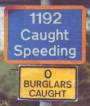
 . One of these contraptions would be a no-no as far as she is concerned.
  My own Dad is 79 and still drives well - as does my mother who is a couple of years younger. I did not intend it to read as it apparently does - just a lowly copper - not in same intellectual league as my cousins ..... and our mad doc here ...