PeterE wrote:
dcbwhaley wrote:
It sounds as if you have all discredited his paper without reading it. As in: "I know what is true. Please don't confuse my mind with facts".
Doesn't the paper start from the premise that public transport is in some way "better" than private cars - so its author made up his mind before he started.
The actual Telegraph report is here.
Thanks for posting that Peter.

Love the impartial description of the report's aim:
Quote:
The aim is to persuade motorists up and down the country to abandon their cars for one billion journeys in the next four years - in favour of travelling by bus...
I wonder why this report may be scientifically true while running counter to what a lot of people observe?
1. Environment that the test is conducted in. I imagine the least car-friendly commute (A23 into Brighton perhaps?) was chosen.
2. Technically the definition of 'stress' may be misleading to the casual reader. The report measured heart rate and electrodermal stress. As far as I can understand, this would not differentiate between stress and excitement. I would presumably get quite a high "stress" reading when out in my car for a Sunday morning hoon, but I would not describe myself as stressed.
So maybe for a narrow set of godawful urban commutes, driving may elicit a stress response. Fine.
But being on a bus can induce boredom, despair at the inability to influence your circumstances, and if (like me) you're a bit of a snob that can't abide gobby teenagers, distaste as well

.
Equally, if I have a clear run home, I can leave work in a wretched mood if I've had a bad day but end up at home with a higher heart rate - and much happier!
One last thought, would the report's author try measuring 'heart rate and electrodermal stress' of cyclists and bus passengers and come to the same conclusion? Presumably physical exertion produces the same response, so cyclists must be very 'stressed'.

 Login
Login Register
 FAQ
FAQ Search
 Members


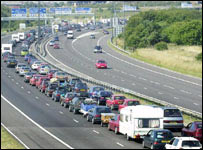
 is going to publish a paper today/tomorrow showing that commuting by bus is 'less stressful' than by car.


 This of course assumes a bus goes anywhere near where you want to go at a sensible time and doesn't take 5 times as long.